Outdoor Growing in Ireland: Mould Resistance, Strain Selection and Regional Differences
Royal King Seeds
Cultivation team

Contents
For outdoor growing in Ireland, choose a variety that finishes by the last week of September and carries loose, airy flowers rather than dense ones. Rain falls here in every month of the year with an autumn peak, so grey mould decides the harvest long before cold does. Everything else — potency figures, yield claims, terpene descriptions — is secondary to those two traits.
Regional choice matters less than most guides suggest. Ireland is close to a single temperate oceanic climate end to end, and what changes between counties is a gradient in rainfall, wind and humidity, not a change of climate. That gradient still shifts your deadline by a week or two, which is worth planning around.
Why botrytis sets the ceiling, not frost or heat
Botrytis cinerea — grey mould, or bud rot — is a fungus that colonises flower tissue from the inside, usually starting at a dead petal or a damaged stem, and spreads outwards through anything that stays wet for long enough. It does not need a heatwave or a cold snap. It needs moisture and still, packed tissue.
Irish Septembers supply exactly that. Met Éireann's monthly climate records show rainfall in every month with an autumn maximum, so the wettest, dullest weeks of the year land squarely on the flowering window. There is nowhere on the island where flowering happens dry, and any guide promising you a dry finish outdoors has not looked at the data.
Heat is not a risk factor worth planning for, and a frost that kills a plant here usually arrives after a sensible variety has already been cut. Plan the whole season against water sitting inside a bud, and the other problems mostly take care of themselves.
Bottom line: In Ireland the yield limit outdoors is grey mould in September, so mould resistance beats every other trait on a seed description.
The west can take more than twice the rain the east does
Approximate annual rainfall, in millimetres, across the Irish rainfall gradient, from Met Éireann's long-term climate records.
A grower in the east is managing occasional wet weeks; a grower in the west is managing a wet background with Atlantic wind on top, which means smaller plants, better spacing and an earlier cut-off date rather than a different technique.
What actually makes a plant mould-resistant
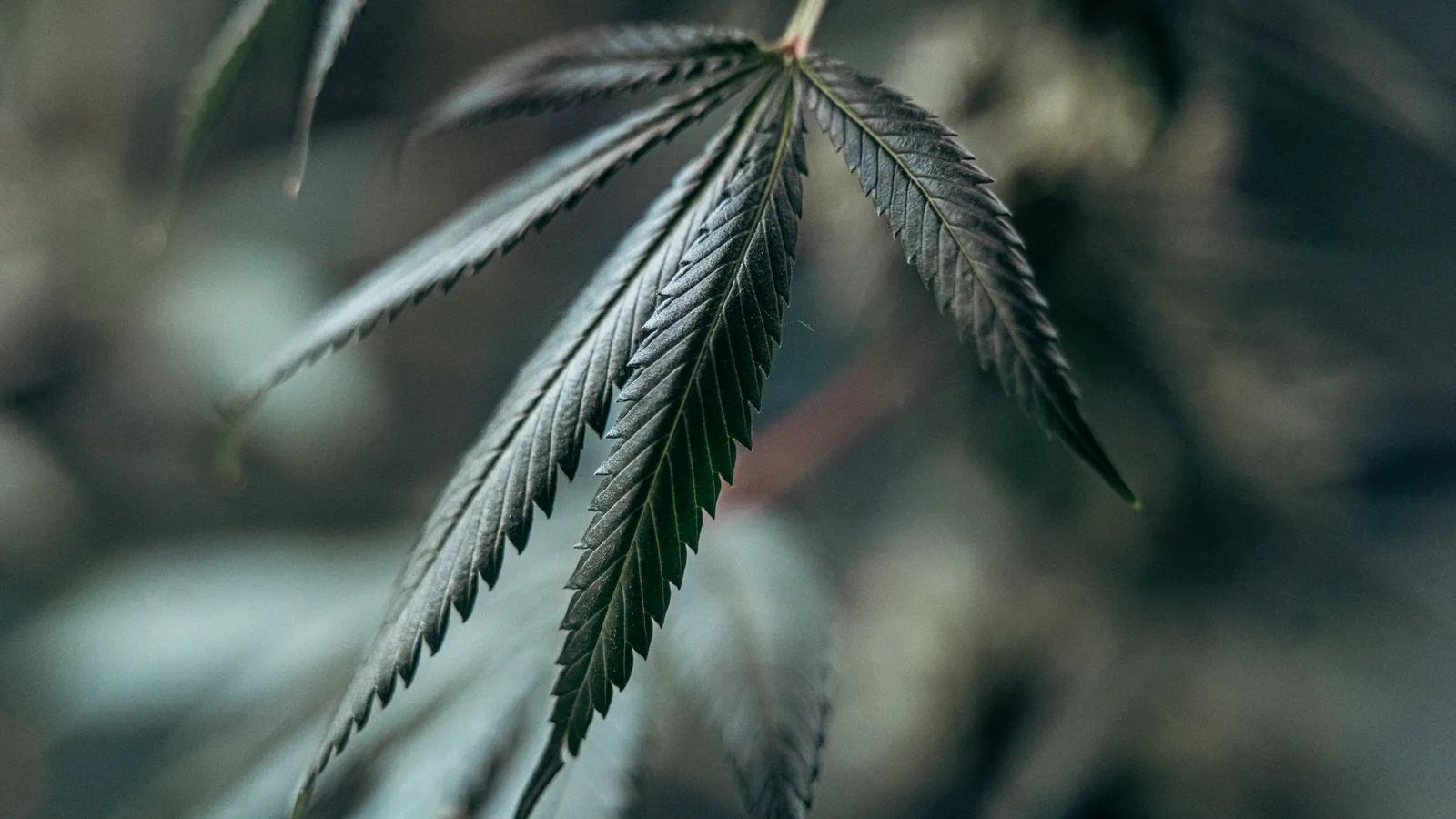
"Mould resistant" on a seed listing is a shorthand for several separate physical traits. Knowing which ones you are buying tells you far more than the phrase itself.
- Open, spaced calyxes that let air move through a cola instead of trapping it.
- A short flowering period that ends before the worst of the autumn rain.
- Long internodes and thin lateral branching that shed water and dry quickly.
- Narrower leaves and fewer sugar leaves buried in the bud.
- Fast early growth that outruns slug damage and root stress in a cold June.
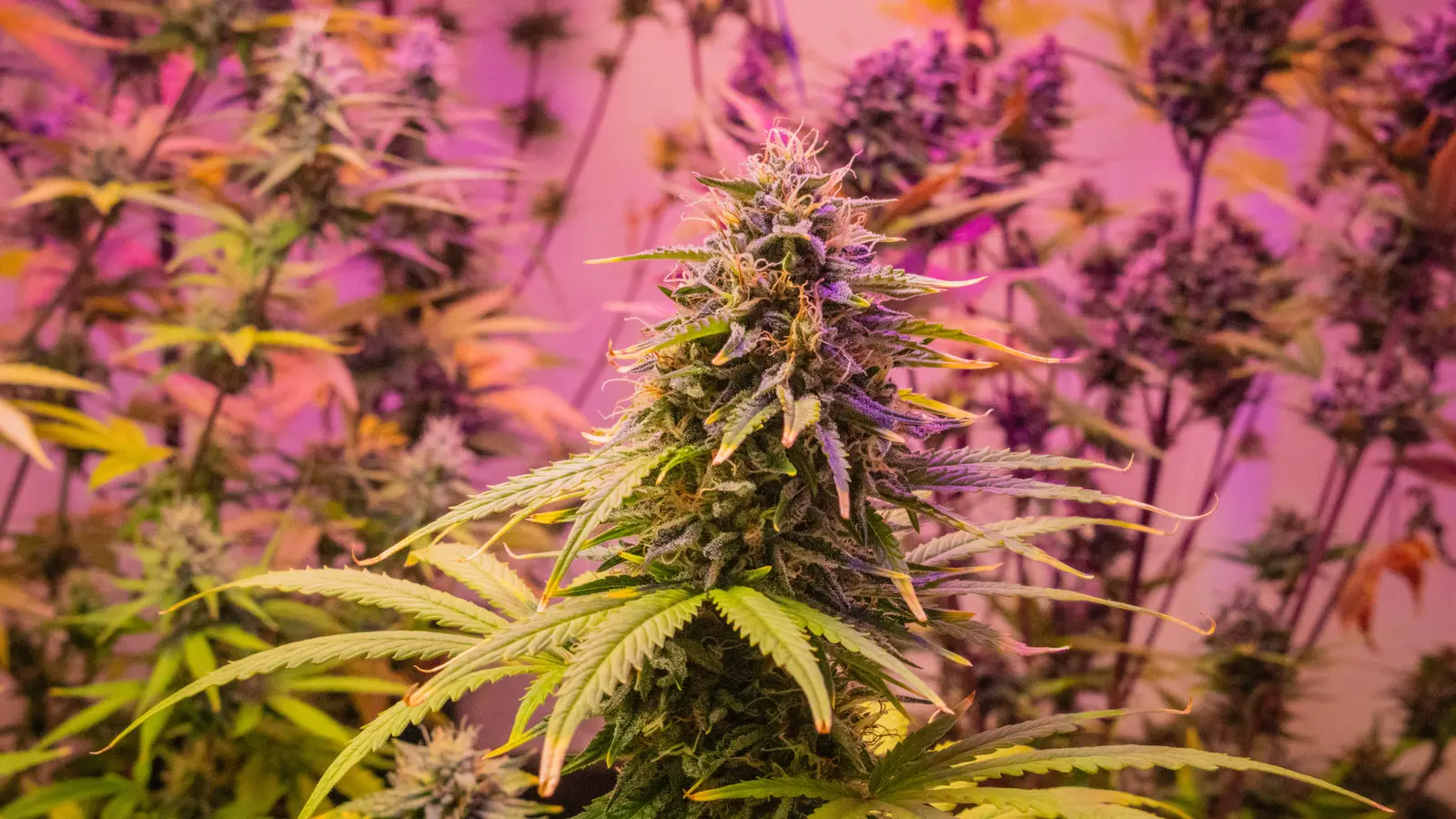
Dense indica-dominant flowers are the classic Irish failure. They look impressive in week six and hold a teaspoon of water in the centre of each cola by week nine. Sativa-leaning and loose hybrid structures give up some weight per flower and return it by not rotting.
| Trait | Why it matters here | What to look for |
|---|---|---|
| Open bud structure | Air dries flowers between showers | Sativa-leaning or airy hybrid |
| Short finish | Beats the October shutdown | 7–9 weeks flowering |
| Wide spacing of colas | Reduces contact rot | Long internodes |
| Low foliage density | Cuts humidity inside the canopy | Thin leaf, narrow blades |
| Early vigour | Survives a cold start and slugs | Fast veg, sturdy stems |
Read a description against those five rows rather than against the THC number. A variety that scores on three of them will out-yield a heavier one that scores on none.
Bottom line: Open structure and a short finish are the two traits that actually survive an Irish autumn — density is a liability.
The regional gradient and what it changes
Ireland's 26 counties share one climate with four practical variations. Treat the table below as adjustments to a single plan, not as four different growing systems.
| Area | Rain, mm/year | Main constraint | Adjustment |
|---|---|---|---|
| East | ~750 | Least limiting; best sunshine | Can carry a slightly later finisher |
| West | 1,200–2,000+ | Rain plus Atlantic wind | Shelter, staking, earliest cut |
| Midlands | Intermediate | Widest frost window, heavy ground | Raised beds or large pots |
| South | Intermediate to high | Highest humidity, mildest frost | Hard defoliation, wide spacing |
The east's advantage is real but modest: it buys roughly a week of extra hang time, not a Mediterranean finish. The south's mild, long frost-free season tempts growers into late harvests, and its humidity is precisely why that backfires.
Midlands growers fight the ground more than the sky. Heavy, slow-draining soil keeps roots cold in June and waterlogged in September, so container growing or a built-up bed changes more than any strain choice will.
Bottom line: The regional difference is a week of harvest timing and a change of site preparation, not a different strain list for every county.
The outdoor season, start to finish
Latitude 51.5 to 55.4 degrees north gives about seventeen hours of daylight at midsummer, which is a genuine vegetative advantage, and it is the same latitude that shuts the season down abruptly in October.
- Germinate indoors and grow on under a window or a light; outdoor sowing wastes weeks.
- Harden off gradually, an hour or two outside per day, increasing.
- Plant out once night temperatures hold reliably above about 10°C.
- Defend against slugs nightly; a single night can strip a transplant.
- Use the long days: top, tie down and open the canopy while growth is fast.
- Strip interior leaves, thin lower branches, widen spacing between plants.
- Inspect daily after rain; remove any browning or wilting flower immediately.
- Harvest. A crop still standing in mid-October is usually a crop being lost.
Slugs, not exotic pests, are what strip a young Irish transplant in June — collars, grit and nightly checks for the first fortnight after planting out matter more than any spray programme.
Common mistakes
- Choosing by yield figure. High grams-per-square-metre claims come from dense indoor canopies. Spot it when a description mentions weight and never mentions flowering length. Choose on finish date and structure instead.
- Waiting for trichomes to go amber. Perfect ripeness in mid-October usually arrives on a rotten plant. Spot it when you are checking a loupe daily while the forecast shows a week of rain. Cut slightly early and accept the trade.
- Planting out too soon. A May cold snap stalls a plant for a fortnight and it never catches up. Spot it in yellowed, stunted seedlings that sit still for weeks. Wait until nights hold above about 10°C.
- Leaving the canopy dense. Untouched interior leaves hold moisture against flowers for days. Spot it by pushing a hand into the plant mid-morning and finding it damp. Strip interior growth through August.
- Treating one rotted cola as containable. Botrytis spores spread through a plant and between neighbours. Spot it as a grey, dusty patch or a cola that wilts while the rest looks fine. Remove it entirely, well below the damage, and bag it away from the plot.
- Buying regular seed by accident. Half a small outdoor plot lost to males is a season wasted; if you are unsure what the label controls, read what seed labels control and how to spot preflowers before ordering.
Bottom line: Most Irish outdoor losses come from harvesting too late and leaving the canopy too dense, and both are free to fix.
Choosing between photoperiod and autoflower outdoors
Photoperiod feminised plants use those seventeen-hour June days to build size, then flower on the shortening light of August and September. They yield more and finish later, which suits the east and sheltered southern sites.
Autoflowers run on their own clock and can be timed to finish in late August, before the worst of the autumn rain — a strong argument in the west. The trade-off is size, and the comparison is worked through in more detail in autoflower versus feminised seeds for Irish conditions. Wet-west growers often run both: an autoflowering variety as the safe crop and one photoperiod as the gamble.
Among photoperiod options, Blue Dream Feminised is included here because its reported sativa-leaning, loosely packed flower structure matches the open-bud criterion above, and its vigorous, long-internode growth sheds water rather than trapping it. The honest caveat is its flowering length: it is an east-coast, sheltered-site or polytunnel choice, not one for an exposed western plot.
Where to go from here
You now have the two filters that matter outdoors here — a finish inside September and a flower that air can move through — plus the regional adjustment for your own ground. Put those into the strain finder to shortlist by finish time and structure, or browse the varieties selected for outdoor growing and read each description against the five-trait table above.
If you are still deciding between seed types before you shortlist, start with choosing cannabis seeds for Ireland's short, wet season, or the fuller walkthrough of seed types, finish dates and wet-autumn traits.
Sources
- Met Éireann, monthly climate data.
- Met Éireann, climate of Ireland overview.
- Teagasc, crops research and advisory information.
Frequently Asked Questions
- When should I harvest cannabis outdoors in Ireland?
- Aim for late September into the first days of October. Rainfall peaks in autumn and daylight falls away quickly at Irish latitudes, so ripening slows exactly when mould pressure is highest. Cutting a few days early costs a small amount of maturity; leaving a plant standing into mid-October regularly costs the whole crop to grey mould. Inspect flowers daily after rain from early September onwards.
- Which cannabis strains resist mould best in the Irish climate?
- Varieties with open, airy flower structure and a short flowering period resist mould best. Look for sativa-leaning or loose hybrid bud shape, long internodes, thin lateral branching and a seven to nine week finish. Dense indica-dominant flowers hold water in the centre of each cola and are the most common Irish outdoor failure, regardless of how well they perform indoors elsewhere.
- Is it possible to grow cannabis outdoors in the west of Ireland?
- Yes, but with an earlier cut-off and more shelter. Western areas receive roughly 1,200 to over 2,000mm of rain a year against about 750mm in the east, with Atlantic wind on top. Grow smaller plants, space them widely, stake everything, and favour fast-finishing varieties or autoflowers timed to be cut in late August or the first half of September.
- Do autoflowers work better than photoperiod plants outdoors in Ireland?
- Autoflowers suit the wettest sites because they can be timed to finish before the autumn rainfall peak, trading size for safety. Photoperiod feminised plants use the seventeen-hour June daylight to build much larger frames and yield more, but they finish later, which suits eastern and sheltered southern gardens. Many growers in the west run both and treat the photoperiod as the optional crop.
- What is the biggest threat to young cannabis plants in Ireland in June?
- Slugs. A newly planted transplant can be stripped in a single night, and it happens far more often than any exotic pest problem. Check plants after dark for the first fortnight after planting out, use collars or grit barriers around each stem, and keep the surrounding ground clear of damp cover where slugs shelter during the day.
Related Articles
Autoflower vs Feminised Seeds in Ireland: Finish Dates, Mould Risk, Yield and Indoor Running Costs
starting-outHow to Choose Cannabis Seeds in Ireland: Seed Types, Finish Dates and Wet-Autumn Traits
outdoorCannabis Seeds in Ireland: Seed Types, Season Dates and How to Choose for a Wet Autumn
cultivarsHemp Seed Types for Irish Growers: Fibre, Grain, Dual-Purpose and CBD-Rich Compared
Ready to Start Growing?
Browse 1,677 cannabis seed varieties with discreet shipping to addresses in all 26 counties and our sourced grow figures.
Shop Cannabis Seeds