How to Choose Cannabis Seeds in Ireland: Seed Types, Finish Dates and Wet-Autumn Traits
Royal King Seeds
Cultivation team
Contents
- The order to make the decision in
- The four seed types you will see on a label
- What a realistic Irish finish date looks like
- The rainfall gradient, and what it changes
- Wet-autumn traits worth paying for
- If you are growing indoors instead
- Common mistakes when choosing seeds here
- A short checklist before you buy
- Where to take this next
- Sources
Choose seeds by finish date first, flower structure second, and leave potency and yield figures for last. On an Irish plot the variety that makes it is the one cut and hung before the autumn rain settles in, so a strain reported to finish flowering in eight to nine weeks, with airy rather than solid buds, beats a heavier variety that wants the middle of October.
That ordering is not a preference. Rain falls here in every month of the year with an autumn maximum, according to Met Éireann's monthly climate data, which means the dullest, wettest weeks of the year land squarely on the flowering window.
Nowhere on the island flowers dry. Everything below follows from that one fact: which seed types make sense, what a realistic harvest date looks like, and which advertised traits are worth paying for.
The order to make the decision in
Most seed listings are written to sell on the two numbers that matter least here. Work down this order instead and the shortlist shrinks fast.
- Finish date — can it be dry and hanging by the first week of October?
- Flower structure and mould resistance — will air move through the bud?
- Plant size and stem strength — can it take Atlantic wind without folding?
- Seed type — autoflowering, feminised photoperiod, regular or CBD-rich.
- Reported potency and yield — useful only once the first four are satisfied.
Bottom line: A variety that cannot finish by early October has no yield figure worth reading in Ireland.
The four seed types you will see on a label
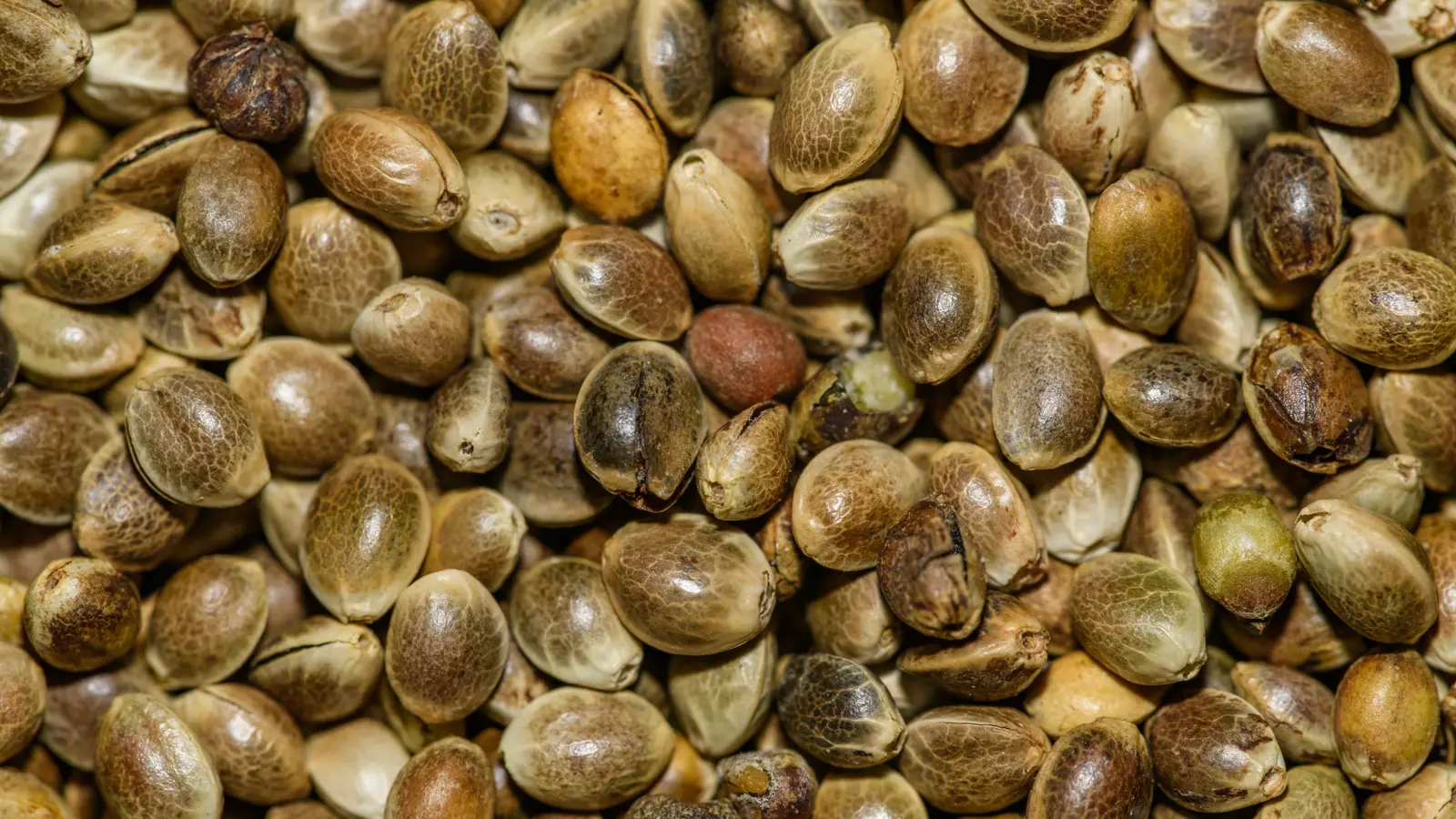
- Flowers when nights lengthen; all plants female
- Flowers on age, not daylight; compact and quick
- Mixed male and female; for breeding and seed work
- Bred for a different cannabinoid balance; sold across both photoperiod and auto types
“Photoperiod” simply means the plant waits for shorter nights to trigger flowering. “Autoflowering” means it starts on a schedule of its own, usually a few weeks after it germinates, regardless of the calendar.
| Seed type | Flowering trigger | Typical seed to harvest (weeks) | Outdoor fit here | Main risk |
|---|---|---|---|---|
| Autoflowering | Plant age | 10–13 | Strong, in pots or small plots | No recovery from a bad June |
| Feminised photoperiod | Lengthening nights | 18–22 from a late-May plant-out | Good, if the finish is short | Late finishers slide into October rain |
| Regular | Lengthening nights | Similar to feminised | Poor unless breeding | Half the plot is male |
| CBD-rich | Varies by line | Varies by line | Depends on finish date | Structure often dense |
Read across the table and the pattern is plain: autoflowers buy you certainty of date, photoperiods buy you size from Ireland's long midsummer days, and regular seed only earns its place if you intend to work with pollen. The trade-off is set out in more detail in our comparison of autoflower and feminised seeds in Irish conditions.
What a realistic Irish finish date looks like
Work backwards from the first week of October, not forwards from sowing. Ireland sits between 51.5 and 55.4 degrees north, so the season opens late, gives an unusually long midsummer day and then shuts abruptly.
- Plant out once night temperatures hold above about 10C; earlier plants sulk rather than grow.
- Slugs, not exotic pests, are what strips a young transplant — check the stems after every wet night.
- Around seventeen hours of daylight at midsummer, the one genuinely generous fact about growing here.
- Vegetative growth on photoperiods; autoflowers sown in late May are already flowering.
- Flowering begins on photoperiods; thin inner growth now, while the plant can still close the wound.
- The wettest, dullest stretch of the flowering window — inspect for grey mould every few days.
- Harvest. Anything still swelling after this is being gambled, not grown.
A variety advertised at ten or eleven weeks of flowering, started in late May, is asking to be cut in mid to late October. That is the single commonest reason an Irish outdoor crop is lost.
Bottom line: If a strain cannot be hanging by roughly 5 October, treat it as an indoor variety.
The rainfall gradient, and what it changes
Ireland is close to one climate end to end — temperate oceanic — and what varies is a gradient rather than a set of regions. The east gets around 750mm of rain a year and the best sunshine; exposed western ground can take 1,200mm to over 2,000mm, plus Atlantic wind.
The west can take more than twice the rain the east does
Annual rainfall, millimetres, long-term averages across the Republic, from Met Éireann climate records.
That spread does not change which seed type you buy; it changes how unforgiving your margin is. An eastern grower can carry a variety that finishes in the first days of October, while a western or exposed coastal plot should choose a week earlier and accept less bulk, a point we take county by county in our guide to mould resistance and outdoor strain selection across Irish conditions.
The midlands bring a third problem: the widest frost window and the heaviest ground, so pots or raised beds matter more there than strain choice does. The south is mildest and frost-free longest, but carries the highest humidity — good for growth, hard on dense flowers.
Wet-autumn traits worth paying for
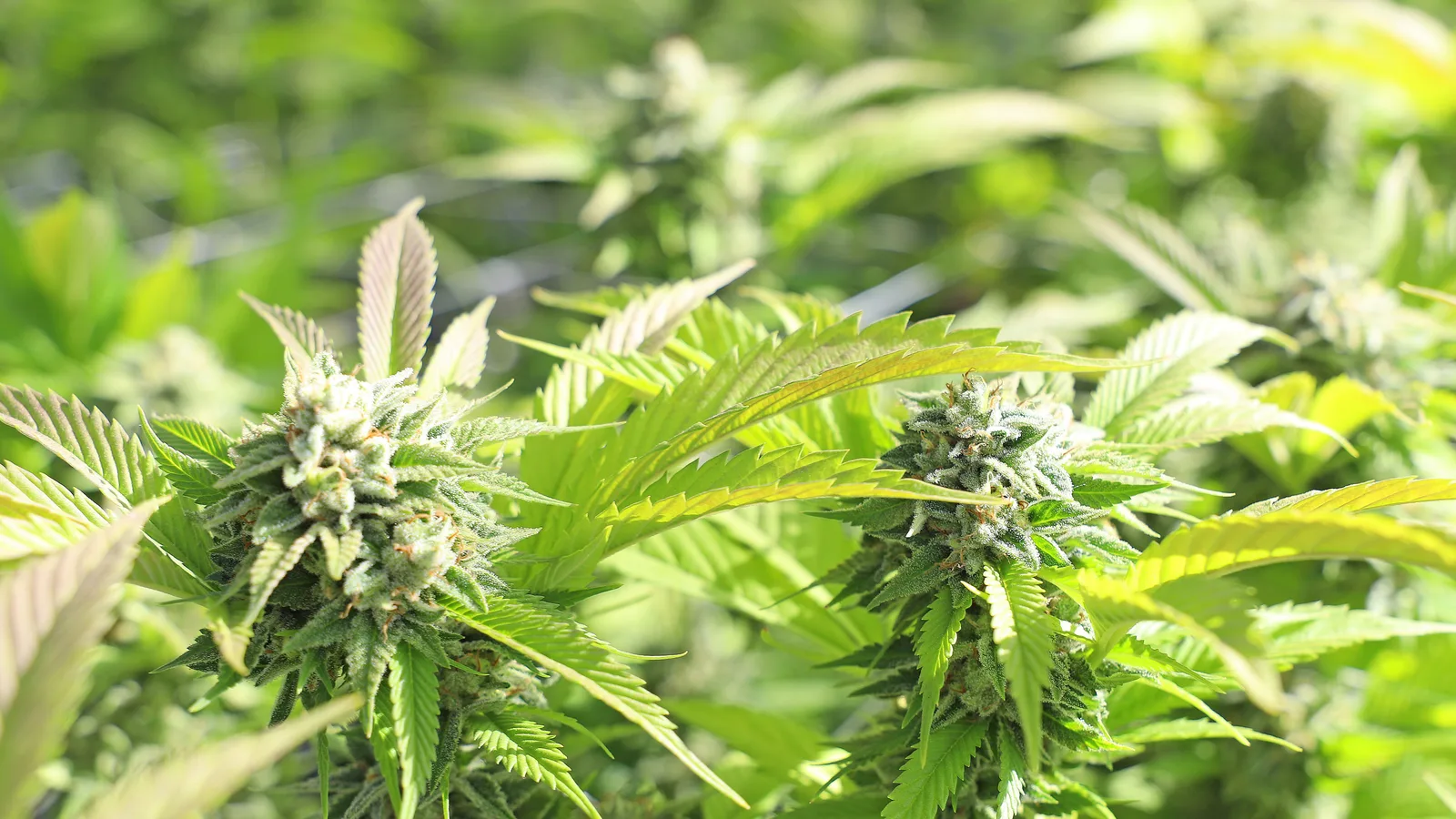
Botrytis — grey mould — is the yield limit in Ireland. Not cold, and never heat. It takes hold where moisture sits inside a bud and cannot dry, so the traits that protect a crop are structural.
- Open flower structure: loose, airy buds that shed water instead of holding it.
- Short flowering time: every week cut off the end is a week of September rain avoided.
- Sativa-leaning bud shape: often more forgiving than the solid, rounded flowers of heavy indica lines.
- Stem and branch strength: a plant that stays upright in wind keeps its canopy open.
- Vigorous early growth: a plant that clears slug height quickly in June needs less nursing.
Note what is absent from that list. Reported drought tolerance, heat tolerance and enormous indoor gram-per-square-metre figures tell you almost nothing about how a plant behaves on wet Irish ground in September.
Bottom line: Buy structure and speed; mould resistance is a shape as much as it is genetics.
If you are growing indoors instead
Indoors here is a damp problem and a cost problem, not a heat problem. Ambient humidity sits near 80% for much of the year, and Irish electricity is among the dearest in the European Union on Eurostat's energy price statistics. A dehumidifier sized properly for the room is the purchase that changes results.
Once you control humidity, the selection rules relax. Long-flowering, dense-budded varieties become reasonable, because you decide the environment rather than the Atlantic. Blue Dream is a fair worked example: a feminised photoperiod with reported flowering nearer nine to ten weeks and fairly solid flowers, which is exactly why it belongs in a dehumidified indoor room rather than on an open plot in the west.
Common mistakes when choosing seeds here
Shopping on the THC figure
What goes wrong: the shortlist fills with long-flowering varieties. You can spot it when every strain you like quotes ten weeks or more of flowering. Instead, filter by finish time first and compare reported potency only within that filtered list.
Assuming autoflowers can be sown any time
What goes wrong: a July sowing puts the whole flowering period into September and October damp. The tell is a plant that starts flowering just as the rain turns. Sow so that flowering falls in the brighter weeks of July and August, which in practice means seed in the ground by late May or very early June.
Choosing rock-hard buds because they look impressive
What goes wrong: the dense core stays wet for days after rain and rots from inside. You find it by squeezing a bud and getting a damp, cool centre, or by spotting a single browning leaf buried in the flower. Choose open structure and thin the interior canopy in August.
Ignoring wind on exposed ground
What goes wrong: tall photoperiods lean, branches split at the crotch and mould enters the wound. Look for plants tilting after the first September gale. Pick shorter, sturdier varieties on western and coastal sites, or stake before flowering rather than after.
Buying a large mixed pack for one season
What goes wrong: leftover seed sits in a warm kitchen drawer in a house at 80% humidity and declines. Cool, dry and dark storage matters here more than in most places — see storing cannabis seeds in Ireland before you buy more than you can plant.
Buying regular seed by accident
What goes wrong: roughly half the plot turns out male and gets pulled in August. Preflower shape tells you early; our note on what seed labels actually control covers spotting and culling them.
Bottom line: Every one of these failures is a date or a structure problem, which is why both sit above potency in the decision order.
A short checklist before you buy
- Finish: reported flowering of eight to nine weeks, or an autoflower cycle of ten to thirteen weeks total.
- Structure: described as open, airy or mould-resistant, not “rock hard”.
- Height: matched to your site's exposure, not to your ambition.
- Quantity: what you can plant in one late-May window, plus a couple spare.
Where to take this next
You now have the order — date, structure, size, seed type, then everything else — and a harvest deadline of early October to test any listing against. Put those criteria straight into the strain finder to filter by flowering time and plant size, or browse the varieties already selected for an Irish season in outdoor strains and autoflowering seeds.
If you want the reasoning behind the deadline itself, our piece on choosing seeds for Ireland's short, wet season goes further into why the calendar, not the genetics, sets the ceiling.
Sources
- Met Éireann, monthly climate data.
- Met Éireann, climate of Ireland.
- Eurostat, energy statistics.
Frequently Asked Questions
- What is the most important thing when choosing cannabis seeds in Ireland?
- Finish date. Rain falls in every month here with an autumn maximum, so the flowering window sits in the wettest weeks of the year. A variety reported to finish flowering in eight to nine weeks can be cut and hanging by early October; one needing ten or eleven weeks is still swelling when the worst weather arrives. Structure and mould resistance come second, potency last.
- Are autoflower or feminised seeds better for Irish outdoor growing?
- Both work, for different reasons. Autoflowers flower on age rather than daylight, finishing roughly ten to thirteen weeks from seed, which gives a predictable early harvest and suits pots and small plots. Feminised photoperiods make better use of Ireland's seventeen-hour midsummer daylight and grow larger, but only if the reported flowering time is short enough to finish by early October.
- When should I plant cannabis seeds outdoors in Ireland?
- Plant out at the end of May, once night temperatures reliably hold above about 10C. Earlier transplants sit and sulk rather than grow, and they spend longer at the height where slugs strip them. Sowing later than early June pushes flowering into the dullest, wettest part of September and October, which is the main reason Irish outdoor crops fail.
- Which cannabis seed traits protect against mould in a wet autumn?
- Open flower structure above all: loose, airy buds shed water instead of holding it against the stem. A short flowering time helps because every week removed from the end is a week of September rain avoided. Strong stems and branches keep the canopy upright and open in Atlantic wind, and vigorous early growth gets seedlings past slug height quickly in June.
- Is it easier to grow indoors in Ireland?
- It is more controllable, but it is a damp problem and a cost problem rather than a heat problem. Ambient humidity sits near 80% for much of the year and Irish electricity is among the dearest in the European Union, so a dehumidifier sized correctly for the room is the equipment decision that matters most. With humidity controlled, denser, longer-flowering varieties become reasonable choices.
Related Articles
Cannabis Seeds in Ireland: Seed Types, Season Dates and How to Choose for a Wet Autumn
autoflowerAutoflower vs Feminised Seeds in Ireland: Finish Dates, Mould Risk, Yield and Indoor Running Costs
pests-and-problemsOutdoor Growing in Ireland: Mould Resistance, Strain Selection and Regional Differences
cultivarsHemp Seed Types for Irish Growers: Fibre, Grain, Dual-Purpose and CBD-Rich Compared
Ready to Start Growing?
Browse 1,677 cannabis seed varieties with discreet shipping to addresses in all 26 counties and our sourced grow figures.
Shop Cannabis Seeds