Storing Cannabis Seeds in Ireland: Temperature, Humidity, Containers and Shelf Life
Royal King Seeds
Cultivation team
Contents
Put them in something airtight with a desiccant, keep them at fridge temperature, keep them dark, and write the date on the label. A small glass jar with a rubber-sealed lid, a sachet of fresh silica gel and a shelf at the back of the fridge will carry a part-used pack from one Irish season to the next, and normally for several seasons after that.
That advice is short because the difficult part is not the method. It is that Ireland hands you the wrong default: a paper packet in a kitchen drawer is fine in a dry continental climate and slowly ruins seed here.
Why Irish air is the problem, not Irish cold
Ireland has no dry season. Rain falls in every month with an autumn maximum, and relative humidity indoors commonly sits near 80% according to Met Éireann's climate summaries.
A dry seed is a sleeping seed. Once it draws moisture out of humid air, its internal chemistry wakes up slightly, burns reserves, and ages faster — without ever getting wet enough to sprout.
Every storage decision you make here is a moisture decision first and a temperature decision second.
The west can take more than twice the rain the east does — and that is the air your jar excludes
Annual rainfall totals for eastern and western areas of the Republic, from Met Éireann monthly climate data. A seed store in Mayo or Kerry is working against a much heavier ambient moisture load than one in Dublin, which is exactly why the sealed container matters more than the room.
Bottom line: In a temperate oceanic climate with no dry month, an airtight container with desiccant does more for shelf life than a cold shelf does.
The three storage horizons
- Sowing this spring — original pack, cool dark press, no fridge needed
- Leftovers for next May — sealed jar, desiccant, fridge
- Keeping genetics — sealed jar or vacuum pouch, desiccant, fridge, opened rarely
Decide which of the three you are in before buying anything. Most growers only need the middle one, because Irish packs get split: a few seeds go out at the end of May and the rest wait for the following season.
| Method | Temperature (°C) | Relative humidity | Suits | Main risk |
|---|---|---|---|---|
| Paper pack in a drawer | 15–20 | Ambient, near 80% | Weeks before sowing | Moisture uptake |
| Sealed jar, cool press | 10–16 | Low, with desiccant | One winter | Summer warmth |
| Sealed jar, fridge | 4–8 | Low, with desiccant | Several seasons | Condensation on opening |
| Vacuum pouch, fridge | 4–8 | Low, sealed at packing | Several seasons | No way to check desiccant |
| Freezer | −18 | Must be very low first | Long-term genetics only | Ice damage if seed is damp |
The jar-in-the-fridge row is the one that fits almost every Irish grower: cheap, reversible, and easy to inspect. The freezer is only worth it if you are certain the seed went in dry, because water inside a seed expands as it freezes.
Bottom line: Match the container to how long you actually need the seed, and default to a sealed jar in the fridge.
Temperature: steady beats cold
Aim for 4 to 8 degrees Celsius, which is ordinary domestic fridge territory. Anywhere consistently cool and dark is better than a cold place that warms up every afternoon.
Repeated warming and cooling is what does the damage, because each cycle moves moisture in and out of the seed coat. That rules out the fridge door shelf, a windowsill, a hot press and the top of a grow tent.
A dedicated cooler is not worth the running cost. Electricity here is among the dearest in the European Union, as SEAI energy statistics show, and a jar takes up less space in the fridge you already run than a bag of carrots.
The condensation trap
Take a cold jar out, open it in a warm kitchen, and moist air condenses straight onto the seeds. Let the closed jar sit on the counter for an hour or two until it reaches room temperature before you open it.
This is the single most common way carefully stored seed gets wrecked, and it happens on the day you finally go to use it.
Humidity and desiccant
The target inside the container is dry air — roughly 20 to 30% relative humidity is the usual horticultural aim for dry seed, and anything below the 80% sitting in your hallway is an improvement.
Use silica gel sachets, ideally the indicating type that changes colour when saturated. Replace or dry them out yearly; a spent sachet is just a lump in the jar.
Rice is the folk remedy and it is a poor one — it is not dry enough to pull moisture down and it sheds dust. A cheap digital hygrometer small enough to sit inside the jar is worth more than any home-made trick.
Keep them dark as well. Light does not have to be direct to matter, so tinted glass, a tin, or a jar inside a closed box all work.
Containers that work, and ones that do not
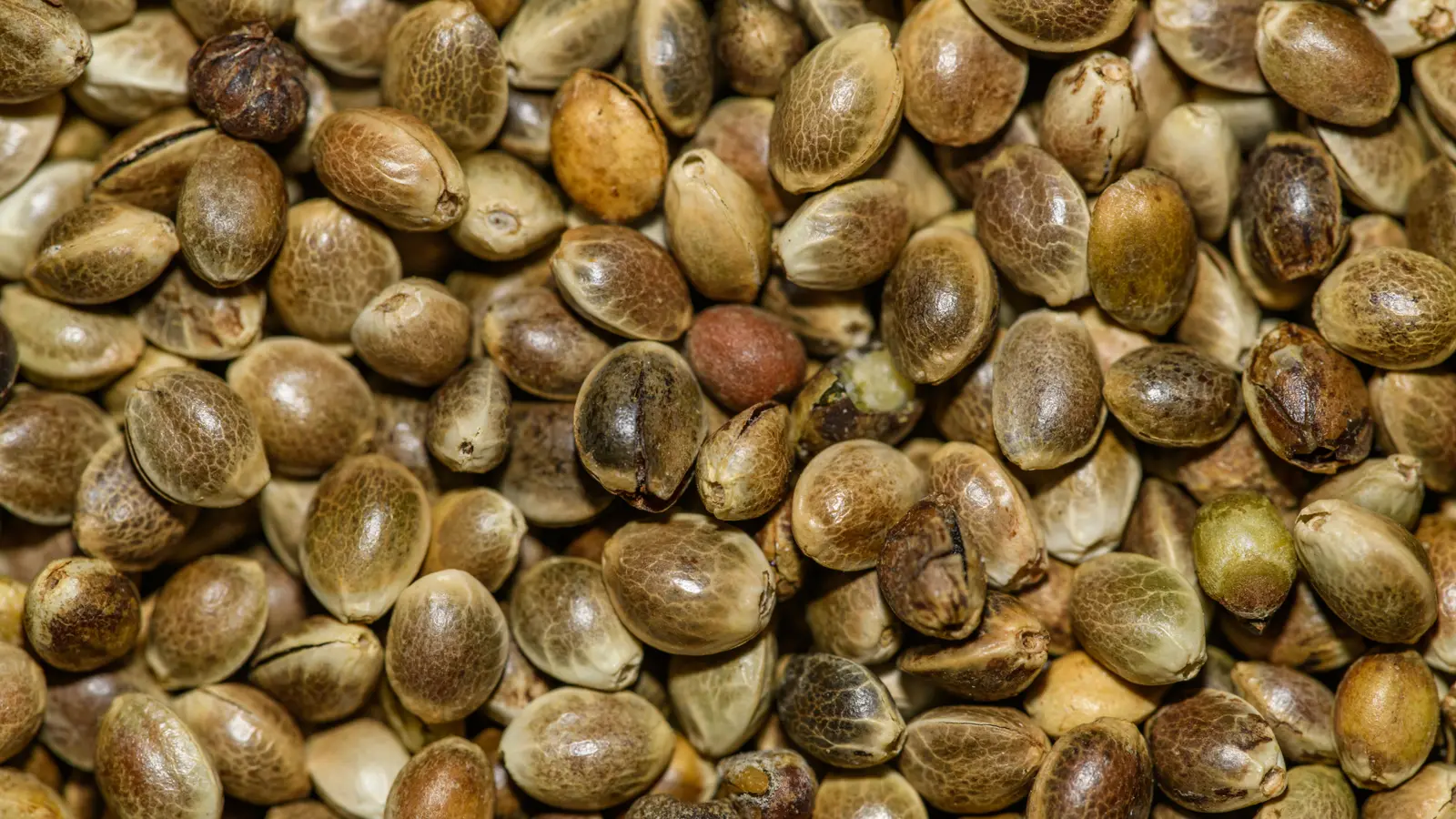
- Choose glass jars with a rubber gasket and a clip or screw lid.
- Keep the original labelled packet inside the jar so you never lose the variety name.
- Use vacuum pouches for packs you do not intend to open for years.
- Avoid thin zip bags, film canisters and pill bottles — none of them are truly airtight.
- Avoid loose seed rolling around a large jar, where handling cracks the coat.
Check the condition of seed on arrival before it goes into storage, because a pack that took damage in transit will not improve in a jar. Our notes on dispatch, tracking and returns in Ireland cover what to do if a pack turns up crushed or damp.
Bottom line: Airtight glass, fresh indicating desiccant, the original label inside, and total darkness — that combination is the whole method.
Shelf life: what actually changes
There is no fixed number, and anyone quoting one is guessing. Shelf life depends on how mature and how dry the seed was to begin with, how stable the temperature has been, and how often the container has been opened.
What you see as seed ages is not a cliff but a slope. Older seed tends to take longer to crack, comes up less evenly, and throws weaker first leaves — which matters enormously in Ireland, where a slow start in June leaves the plant behind before the wet autumn arrives.
So the practical rule is scheduling, not chemistry: date every pack and sow the oldest first. Seed you bought two winters ago should go in this spring, not sit behind this year's purchase.
Appearance tells you little. Dark, hard, glossy seed with a faint tiger-stripe pattern is a reasonable sign of maturity; pale, papery or visibly cracked seed is not. Neither observation replaces simply sowing them.
A storage year in an Irish grow
- Check the pack, label it with the date received, jar it with fresh desiccant.
- Leave the jar shut at the back of the fridge; no inspections, no re-opening.
- Warm the closed jar to room temperature, take out only what you will germinate, reseal the rest.
- Plant out once night temperatures hold above about 10 degrees Celsius.
- Harvest, then note in the jar which varieties handled the wet finish.
Midsummer here gives around seventeen hours of daylight at 51.5 to 55.4 degrees north, per Met Éireann, so seed that comes up strongly in early June gets a genuine vegetative run before the season shuts in October.
Common mistakes
Opening a cold jar in a warm room
Condensation beads on the seeds and the desiccant saturates within minutes. You will see fogging on the inside of the glass. Let the sealed jar reach room temperature first, every time.
Storing seed in the grow room
Tents run warm and humid, and Irish indoor growing is a damp problem rather than a heat problem. If your spare seed lives beside the dehumidifier, move it to the kitchen fridge today.
Trusting the paper packet all winter
Paper breathes, which is precisely wrong at 80% ambient humidity. Seed feels slightly softer and germinates unevenly the following spring. Keep the packet, but put it inside a sealed jar.
Leaving desiccant in for years
Silica gel has a finite capacity and then does nothing. Indicating beads that have turned colour are the tell. Replace yearly, or dry the sachet in a low oven and return it once cool.
Freezing damp seed
Moisture inside the seed expands and damages tissue, and nothing about the seed looks different afterwards. Only freeze seed that has spent weeks over active desiccant, and otherwise stay at fridge temperature.
Losing track of which pack is which
Loose seed in a shared jar becomes anonymous within one season, and in Ireland the variety name is the whole point — mould resistance and flower structure are what decide the outdoor result. Keep each pack labelled and separate.
Which packs end up in storage
Autoflowers tend to get used quickly because growers run them in sequence, while photoperiod feminised packs get split and stored — the difference is covered in our comparison of autoflowering and feminised seeds in Irish conditions.
Blue Dream Feminised is a fair example of the pack that spends a winter in a jar: it is a photoperiod feminised variety with a reported flowering length long enough that many Irish growers give it tent space rather than an outdoor plot, so seeds sit waiting for a slot. It is named here because it matches the storage case this article describes — a part-used photoperiod pack held from one season to the next — not because it is a wet-autumn outdoor pick.
For a plot that has to finish before the rain peaks, a short finish and an open flower structure matter far more than stated yield.
Where to go next
You now know the four variables that govern seed shelf life here: airtight containment, active desiccant, steady fridge temperature and darkness, plus the discipline of sowing the oldest pack first. The next decision is what deserves the jar space.
Use the strain finder to filter by finish time and outdoor suitability before you buy, or browse feminised seeds if you are stocking photoperiod packs to split across two Irish seasons. If you are new to the choice itself, start with how to choose cannabis seeds in Ireland.
Sources
- Met Éireann, the climate of Ireland.
- Met Éireann, monthly climate data.
- Sustainable Energy Authority of Ireland, energy data and statistics.
Frequently Asked Questions
- How long do cannabis seeds last in storage?
- There is no fixed figure, and it varies with how mature and dry the seed was at packing, how stable the temperature has been, and how often the container has been opened. Kept airtight with active desiccant at fridge temperature, a pack can stay usable for several seasons. What fades first is vigour rather than viability, so sow your oldest pack before your newest one.
- Can you store cannabis seeds in the freezer?
- Only if the seed is genuinely dry first. Moisture inside a seed expands as it freezes and damages the tissue, and the seed looks no different afterwards. Freezing suits long-term storage of genetics you will not touch for years, after weeks over active silica gel in a sealed container. For anything you plan to sow next spring, fridge temperature is safer and simpler.
- What humidity should cannabis seeds be stored at?
- Aim for roughly 20 to 30% relative humidity inside the container, which is the usual target for dry seed. In Ireland that means sealing them off from room air entirely, because indoor humidity here commonly sits near 80% and there is no dry month to let a packet air out. Indicating silica gel sachets and a small digital hygrometer inside the jar make it measurable.
- Can I just leave seeds in the packet they arrived in?
- For a few weeks before sowing, yes. For a winter, no: paper and thin foil packets breathe, and in damp Irish air the seed slowly takes up moisture and ages faster. Keep the original labelled packet, because it carries the variety name, but put the whole thing inside an airtight jar with fresh desiccant on a dark fridge shelf.
- Does a fridge door shelf work for storing seeds?
- It is the worst spot in the fridge. Every opening warms that shelf and then cools it again, and repeated cycling drives moisture in and out of the seed coat, which is more damaging than a slightly warmer but steady temperature. Put the jar at the back of a main shelf where the temperature holds steady, or use a consistently cool dark press instead.
Related Articles
Ready to Start Growing?
Browse 1,677 cannabis seed varieties with discreet shipping to addresses in all 26 counties and our sourced grow figures.
Shop Cannabis Seeds